Hurricane-Ready Buildings: Pre-Season Inspections & Maintenance for South Florida Commercial Properties
Every year, South Florida faces one of the most active and costly hurricane seasons in the United States. For property managers overseeing commercial buildings, warehouses, multifamily communities, and industrial facilities, preparation isn’t optional—it’s a critical responsibility.
A single overlooked issue can lead to roof failure, flooding, structural damage, or costly business interruptions. This guide outlines the essential steps for ensuring your buildings are hurricane-ready before the first storm forms.
1. Why Hurricane Preparation Matters for Commercial Properties
Hurricanes in South Florida bring:
- Sustained winds over 100 mph
- Torrential rain and flash flooding
- Flying debris
- Prolonged power outages
- Roof membrane uplift
- Structural stress on façades and openings
For portfolio-level managers, preparation reduces:
- Liability
- Insurance disputes
- Tenant displacement
- Emergency CAPEX events
- Long-term structural deterioration
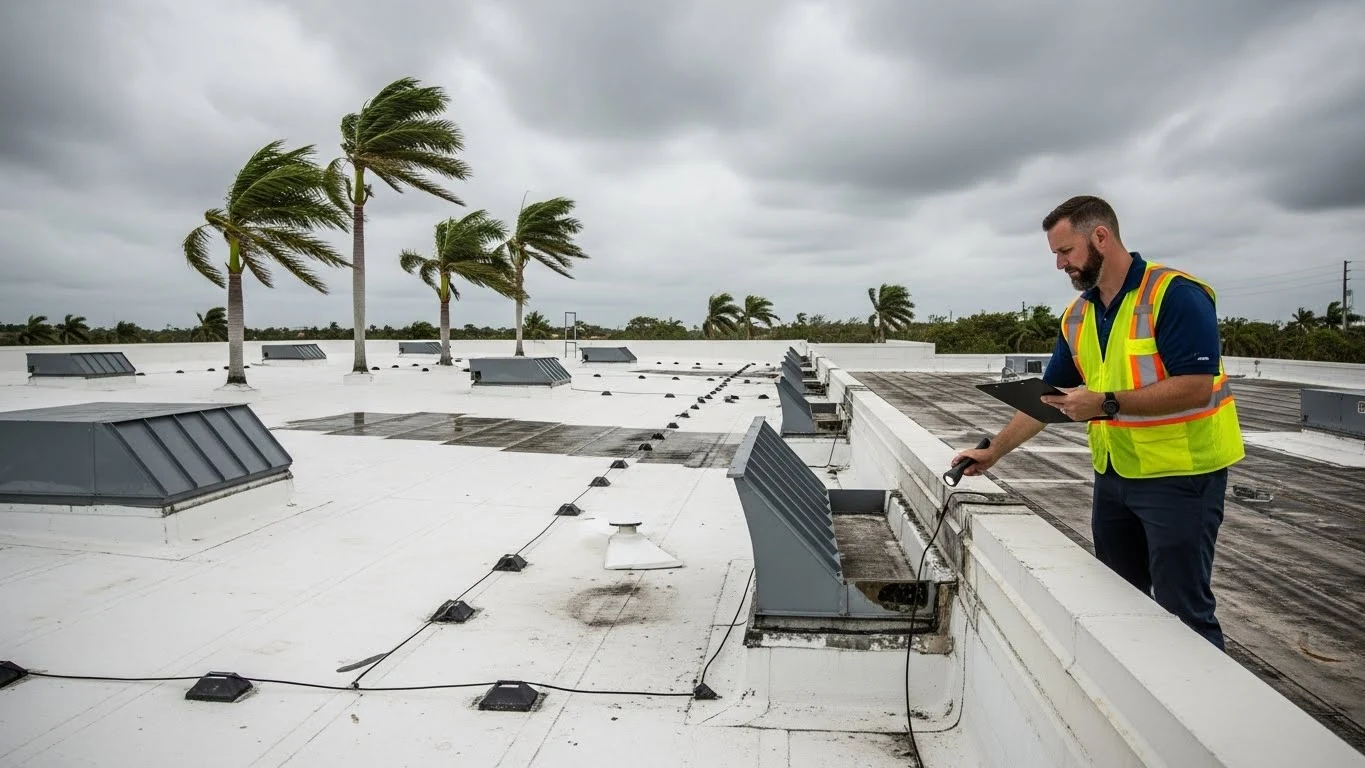
2. Pre-Season Roof Inspections
Your roof is the first line of defense—and the most likely point of failure.
A professional roof inspection should include:
- Membrane condition checks
- Flashing integrity
- Drainage and scupper clearing
- Fastener and perimeter attachment testing
- Moisture scans for hidden water
- Repairing minor vulnerabilities before storms arrive
Even small defects can become major breaches under hurricane pressure.
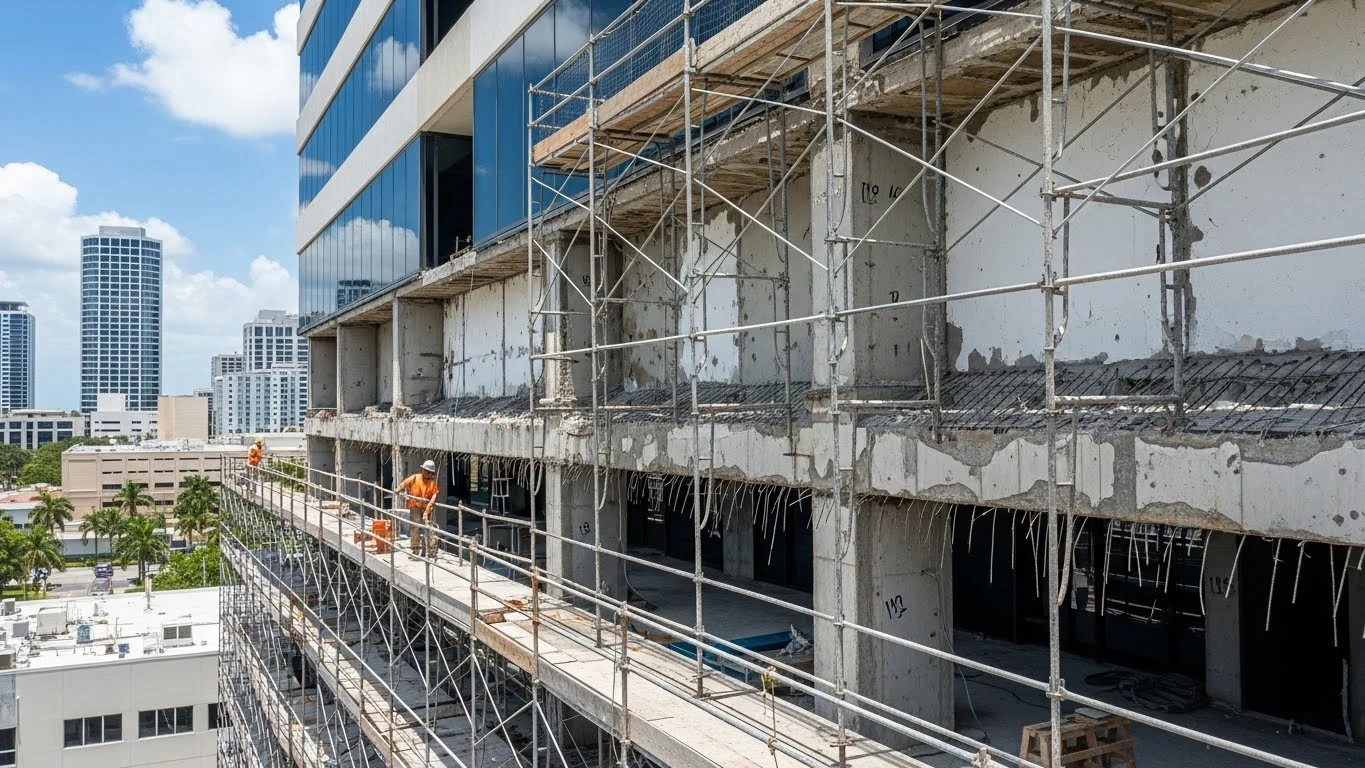
3. Structural & Exterior Envelope Review
Inspect:
- Façades for cracks or loose elements
- Walkways and balconies (concrete deterioration)
- Doors and windows for proper sealing
- Impact-rated systems for compliance
- Parking structures for spalling or rust
Any loose materials around the property must be secured to prevent debris hazards.
4. Drainage & Flood Prevention
Ensure:
- All roof drains and gutters are fully cleared
- Ground-level drains are unobstructed
- Pump systems are tested
- Waterproofing and sealants are intact
- Areas prone to ponding are corrected
South Florida buildings are especially vulnerable to flash flooding and rising water levels.
5. Emergency Systems & Backup Planning
Develop an operational plan that includes:
- Updated contact lists for vendors
- Emergency access permissions
- Backup generators and fuel checks
- Water removal equipment readiness
- Post-storm inspection checklist
- Clear tenant communication protocols
Portfolio managers should standardize this plan across all buildings.
6. Protecting Mechanical & Electrical Systems
Verify:
- Rooftop HVAC units are anchored
- Electrical rooms are sealed
- Critical systems are elevated when possible
- Surge protection is active
- Emergency lighting is functional
These systems are some of the costliest to replace after a severe storm.
7. Post-Storm Assessment
After tropical storms or hurricanes:
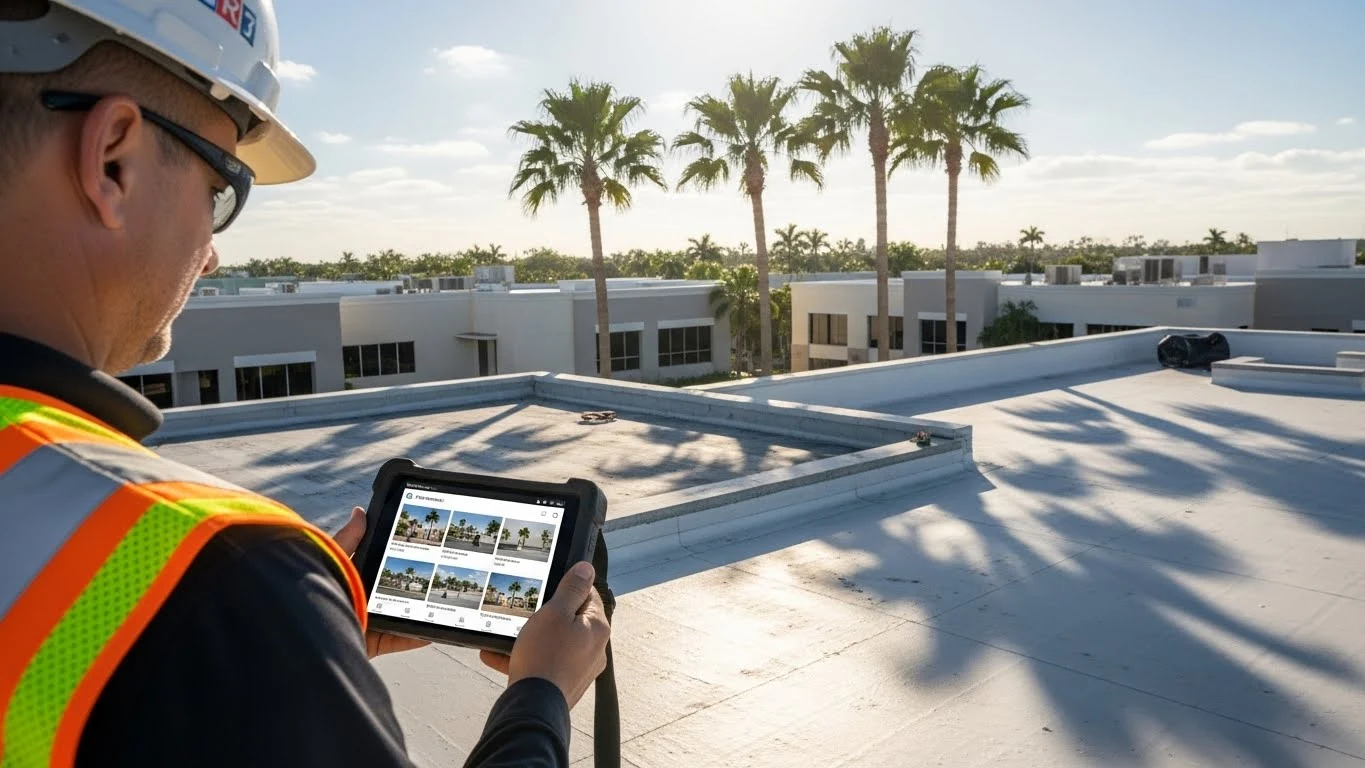
- Schedule a full structural and roof inspection
- Document all damages with photos and video
- Notify insurance immediately with complete evidence
- Address water intrusion within 24–48 hours
- Log all repair actions for compliance and audit purposes
Documentation is essential for insurance and future SB 154 compliance.
Conclusion
A hurricane-ready building isn’t achieved with last-minute fixes—it requires a structured, proactive maintenance plan. By preparing early, property managers can reduce risk, protect assets, and ensure tenant safety across their South Florida portfolios.
Need a hurricane-preparedness inspection for your buildings?
→ Contact GQM Inc. to schedule a pre-season evaluation.



.webp)